Essays/September 2026
How do we talk politics without hating the other side?
About a third of us have already cut somebody off over politics. You can talk without turning the neighbor into a cartoon.
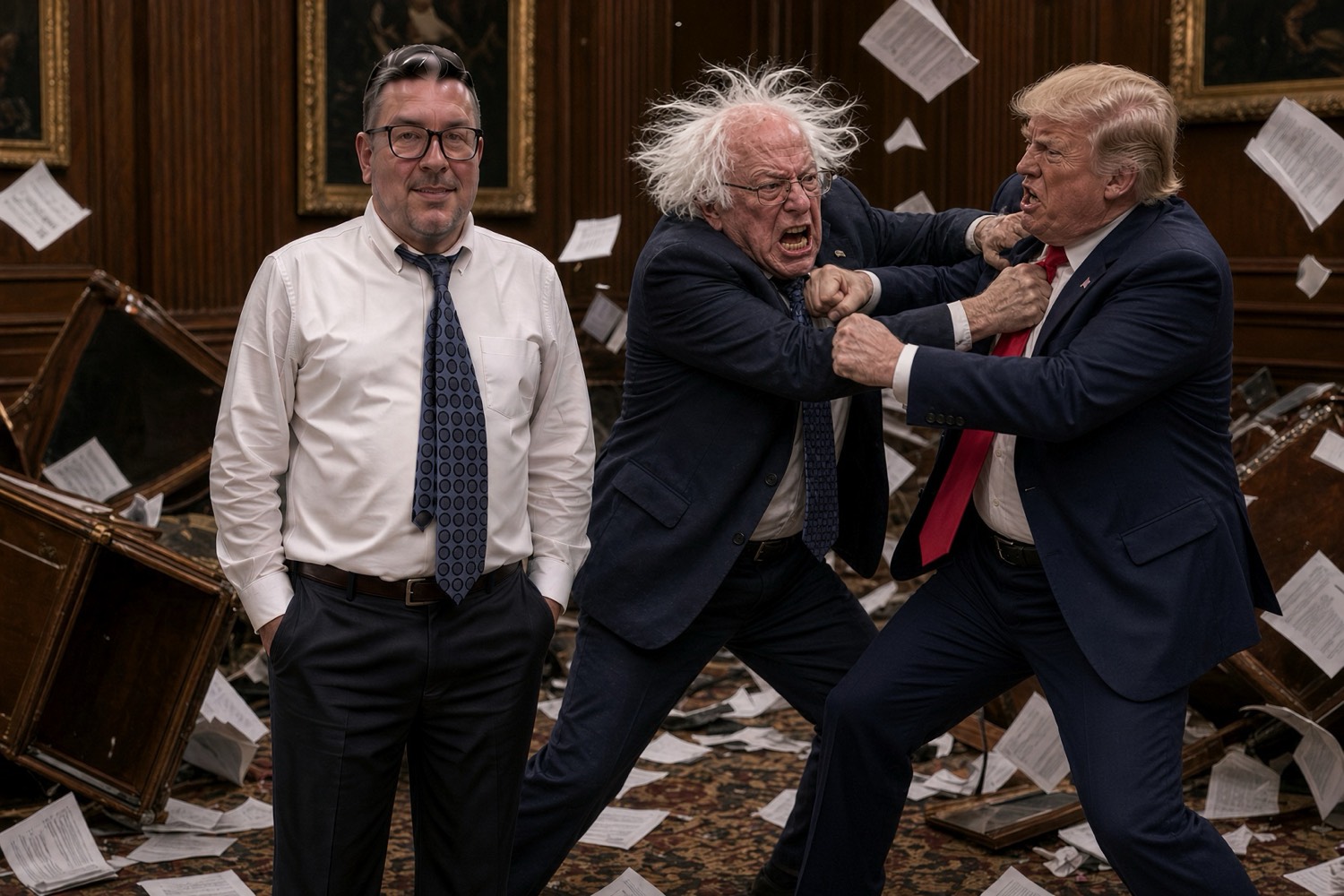
Colin,
You asked how to talk about left and right without ending up hating people, and I keep thinking about how often that question shows up after somebody has already lost someone.
A study out of UC Irvine found that about 37 percent of Americans say they have gone through what the researchers call a political breakup — a friend, a sibling, a coworker, or a partner cut off because politics got into the room and would not leave. Friends went first, which makes a sad kind of sense. It is easier to stop answering a friend than to stop answering your mother. Pew has been saying for a while that most adults look at both big parties with a cold eye: roughly six in ten unfavorable toward Republicans, roughly six in ten unfavorable toward Democrats. So a lot of the country is tired of both jerseys and somehow still meaner to the neighbor wearing one.
Here is the part that will get me in trouble with half the room.
That same breakup research found Democrats were more likely to report those cutoffs, and more often the ones who started them. Republicans do it too, and anybody pretending otherwise is not paying attention. If you are on the left and that sentence makes you furious, I would ask you to sit with it before you write me off. If you are on the right and you feel like celebrating, put the celebration down. Gloating over somebody else’s empty chair is still hate. It just found a flattering angle.
Hate feels like clarity when you are tired. Most of the time it is fear that learned how to talk loud. People on the left are often scared that staying polite means real harm keeps walking while everybody practices manners. People on the right are often scared that staying polite means watching what they love get laughed out of the room and being called names for noticing. I have heard both of those fears at the same table here in Kentucky, with the casserole still moving and nobody converting anybody, and the night did not end the country. That has to stay possible.
You can think the other side is wrong about almost everything. You can vote like the stakes are high, because sometimes they are. What you do not get to do is turn a regular person into a cartoon because a feed handed you a script. Most folks are not writing the bill you hate. They are worried about rent, a kid who came home saying nobody sat with him at lunch, a parent in a hospital chair, and whether Wednesday is going to hold.
If politics shows up tomorrow — a news alert, a cousin’s post, somebody at work who cannot leave it alone — try one small thing instead of a performance. Tell them, in one honest sentence, what you are afraid of. Then ask what they are afraid of, and actually wait for the answer in their words, not the version you plan to argue with. If it turns into a scoreboard, quit while you still like each other. “I care about you more than this point” is a full sentence. You can leave it there.
If your politics needs an enemy at dinner to feel alive, your politics is bullying you, and you are allowed to stop doing its work for free.
Bullies Among Us is the short book for naming harm without theater — signed paperback, ten dollars. The free lesson is The Cartoon Bully Is a Lie.